
Embracing the Agentic Workforce: A New Era of Human-AI Collaboration
The concept of an agentic workforce is revolutionizing how businesses operate by seamlessly integrating autonomous AI systems with human expertise. Leveraging the CARTA Methodology, organizations can capture and reflect team activities to design AI-augmented teams that boost productivity without replacing human roles. This article explores the agentic workforce, practical implementations of CARTA, and the impact of AI integration on business efficiency through enhanced human-AI collaboration. Additionally, we will discuss the challenges faced during AI adoption and envision a future of work shaped by these innovations.
Understanding the Agentic Workforce
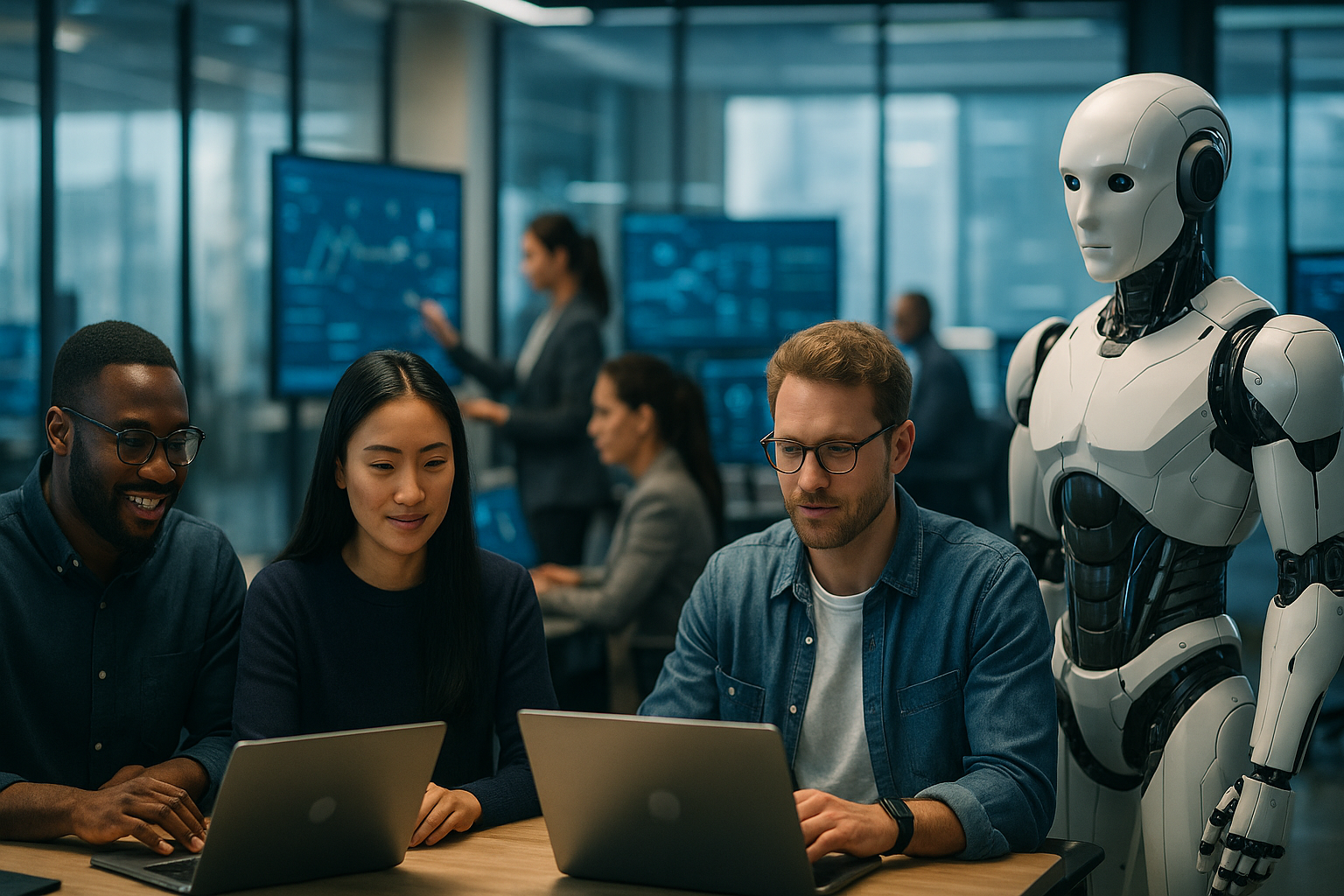
The agentic workforce represents a transformative evolution where autonomous AI agents and human workers collaborate seamlessly as a unified team. At its core, agentic AI equips systems with autonomous reasoning—enabling them to interpret complex goals and independently decide how best to achieve them without rigid programming. This intelligence extends to real-time adaptability, allowing AI to dynamically adjust tactics based on evolving contexts and data. Furthermore, these agents excel at multi-step task execution, managing entire workflows by breaking down goals into subtasks and executing them efficiently [Source: Workday].
This hybrid workforce fundamentally shifts human roles from performing routine tasks to focusing on high-level strategizing and orchestration, thereby preserving human expertise in decision-making while leveraging AI for operational efficiency. Unlike traditional automation, agentic AI fosters flexibility and true collaboration—rather than mere task delegation—enabling outcome-focused work models that are more resilient and scalable. Emerging roles such as M-shaped supervisors, who oversee both AI agents and humans alongside AI-augmented frontline workers, exemplify how businesses are reimagining teamwork in this new era [Source: Wing VC].
Implementing the CARTA Methodology
The CARTA Methodology, which stands for Capture and Reflect Team Activity, introduces a novel approach to human-AI collaboration by structuring how teams integrate AI into their workflows. At its core, CARTA entails five stages: Capture, where detailed data on team activities and workflows are comprehensively recorded; Analyze, which identifies key areas where AI can augment or automate tasks; Map, designing a blended workforce architecture that balances human and AI roles; Design, specifying how AI tools are integrated into human processes; and Guide, developing strategic roadmaps for continuous improvement.
In contrast to traditional static methods, CARTA emphasizes ongoing and reflective analysis of actual team activities. This ensures that AI integration remains aligned with evolving business needs while keeping humans central to decision-making. This reflective loop assists businesses in tailoring AI augmentation precisely to their unique workflows, scaling productivity without disrupting expertise. For instance, studies indicate that capturing detailed, time-stamped team interactions facilitates precise mapping of collaboration patterns, revealing opportunities for AI to minimize repetitive tasks and streamline communication in real time [Source: arXiv.org]. By maintaining this cycle of capture and reflection, CARTA nurtures adaptive AI-human ecosystems that become increasingly effective over time, rather than relying on one-off deployments.
Applying CARTA in Business Settings
Applying the CARTA methodology in business begins with a discovery phase focused on analyzing current workflows and aligning them with strategic goals. This phase uncovers where AI can seamlessly augment tasks by understanding pain points and opportunities within existing processes. The subsequent planning phase translates these insights into custom roadmaps that clearly define how AI and human roles will interblend to enhance efficiency and impact. Business leaders prioritize security, scalability, and adaptability while establishing realistic goals for AI integration.
During execution, best practices emphasize continuous stakeholder involvement and iterative improvement. Agile feedback loops and ongoing monitoring ensure that AI integration remains aligned with evolving needs, facilitating quick recalibration. This continuous optimization drives sustainable productivity gains and enhances workforce satisfaction. For instance, one CARTA-driven project revamped customer support workflows by combining AI triage with human decision-making, resulting in a 30% reduction in resolution time and improved employee engagement. Such implementations underscore CARTA’s capability in fostering adaptable, collaborative AI-human ecosystems that continuously evolve through monitoring and feedback [Source: LoginRadius].
Agentic AI: Transforming Business Efficiency
Agentic AI enhances business efficiency by automating repetitive tasks while amplifying human decision-making power, resulting in remarkable productivity leaps. Enterprises report double-digit improvements in throughput without additional staffing, as AI manages routine functions—such as data entry, scheduling, and standard inquiries—freeing humans for more creative and strategic endeavors. This synergy reduces decision-making times from hours or days to mere seconds, enabling businesses to pivot quickly in dynamic markets. The collaboration between human creativity and AI precision elevates overall work quality, allowing employees to focus on complex reasoning and relationship-building while AI processes vast data streams flawlessly.
Operational flexibility increases as AI agents facilitate parallel processing and dynamic workflow adjustments, adapting in real time to shifting demands. Because AI maintains consistency without fatigue, error rates decline significantly, fostering trust and minimizing costly mistakes. Customers benefit from personalized, rapid, and reliable service powered by AI-enhanced teams. This integration nurtures innovation by enabling new business models and continuous process improvement. Companies that adopt this hybrid workforce can achieve sustainable competitive advantages while responding more rapidly to market shifts, securing long-term success through human-AI collaboration.
For example, workforce management tools powered by agentic AI optimize schedules and anticipate labor needs, whereas AI-driven customer service enhances issue resolution speed and personalizes offers—all contributing to improved employee satisfaction and customer loyalty. Ultimately, agentic AI redefines operational excellence by harnessing the strengths of both humans and machines.
Challenges in AI Adoption
Integrating AI into the workforce is not a straightforward endeavor; businesses often encounter significant challenges. One major obstacle is cultural resistance, primarily driven by fears regarding job displacement. Approximately one-third of employees express concerns that AI could replace them, leading some to actively resist adoption, with younger workers displaying even greater pushback [Source: Workplace Intelligence]. Additionally, a skills gap exists: AI expertise is lacking, and many employees have not received adequate training to work competently alongside AI tools. Only about one-third of workers report having received meaningful AI training from their employers, leaving many in uncertainty [Source: CDW].
On the technical front, integrating AI with legacy systems can be complex, necessitating clean data and seamless workflows. Without strong governance frameworks, ethical concerns and data privacy issues arise, threatening trust and compliance. To address these hurdles, companies are focusing on continuous upskilling, implementing transparent communication that frames AI as augmentation rather than replacement, and fostering engagement programs that empower employees to embrace change. Aligning leadership, building cross-team cooperation, and simplifying AI interfaces also facilitate smoother transitions—turning apprehension into momentum for innovation [Source: Worklytics].
Future of Work: Shaping the Agentic Workforce
The rise of the agentic workforce in the backdrop of AI integration necessitates a strategic reimagining of workforce management. Organizations are shifting towards skills-centric designs that fuse both human and AI capabilities, focusing on aligning roles and workflows to optimize AI-augmented tasks. This transition implies task allocation is now centered on matching skills—be they human or digital—to business requirements, fostering hybrid workflows where AI takes on routine cognitive tasks, liberating humans for strategic and creative work [Source: KPMG].
Adopting this new workforce model requires cultivating a culture that embraces innovation and transformation. Successfully managing this evolution involves transparent communication stressing AI as a facilitator, not a replacement, while fostering leadership synergy to harmonize talent and technology strategies. Cross-functional teams that are proficient in both technological and human aspects become essential, enabling seamless collaboration and shared ownership of human-AI processes [Source: Visier].
Empowering employees through AI tools and autonomy boosts workforce agility, allowing them to adapt roles as needed. Continuous learning frameworks are crucial, supporting upskilling to keep pace with the rapid evolution of AI. These practices—flexible workforce design, employee empowerment, and consistent learning—drive successful human-AI collaboration, unlocking heightened productivity and innovation in increasingly complex and dynamic business environments [Source: AIHR].
Real-World Applications of Agentic Workforce Models
Real-world cases vividly demonstrate how human-AI collaboration within agentic workforce models is reshaping various industries. In healthcare, the University of Rochester Medical Center empowered medical students with Butterfly Network’s AI-enhanced ultrasound devices, leading to a 116% increase in ultrasound charge capture and tripling scans recorded in electronic health systems. This collaboration permitted swift, accurate diagnostics while doctors retained oversight for complex medical decisions [Source: VKTR]. Similarly, radiologists utilizing AI for brain MRI analysis have reported faster anomaly detection and reduced fatigue, merging AI speed with human expertise [Source: PMC].
In the banking sector, AI agents analyze market trends and flag potentially suspicious transactions, enabling human experts to focus on compliance and nuanced risk assessment. This collaboration reduces decision-making times and enhances fraud prevention [Source: Ideas2IT]. Customer service transformations illustrate AI autonomously resolving routine inquiries while escalating complex cases to human agents, thus improving response times and increasing customer satisfaction [Source: OneReach].
Moreover, hybrid teams are accelerating innovation. For instance, multinational retailers are utilizing AI-driven market analysis alongside human creativity to expedite product launches and pricing optimization. In manufacturing, AI agents recommend process enhancements that engineers refine, promoting ongoing improvement [Source: Avanade]. These examples convey essential insights: success in scaling AI integration hinges on clear delineation of human-machine roles, adaptive integration into workflows, and continuous feedback loops that build trust and facilitate learning.
Conclusion: The Future of Agentic Workforces
In summary, the agentic workforce signifies a transformative shift toward merging human creativity with autonomous AI capabilities, facilitating unparalleled business efficiency and innovation. The CARTA Methodology serves as a vital framework guiding this integration, mapping workflows to enable adaptive AI implementation. While challenges in AI adoption persist—ranging from workforce resistance to data security—strategic workforce management and ongoing education will pave the way for successful transitions. Organizations that embrace this hybrid model will gain a competitive edge and thrive in a future where human-AI collaboration is central to sustained success. Cultivating AI literacy and fostering an innovation-driven culture are critical to harnessing the seamless integration of human and AI capabilities in the workplace.
Ready to elevate your workforce through human-AI collaboration? Contact us today to discover how we can support your transformation journey.