

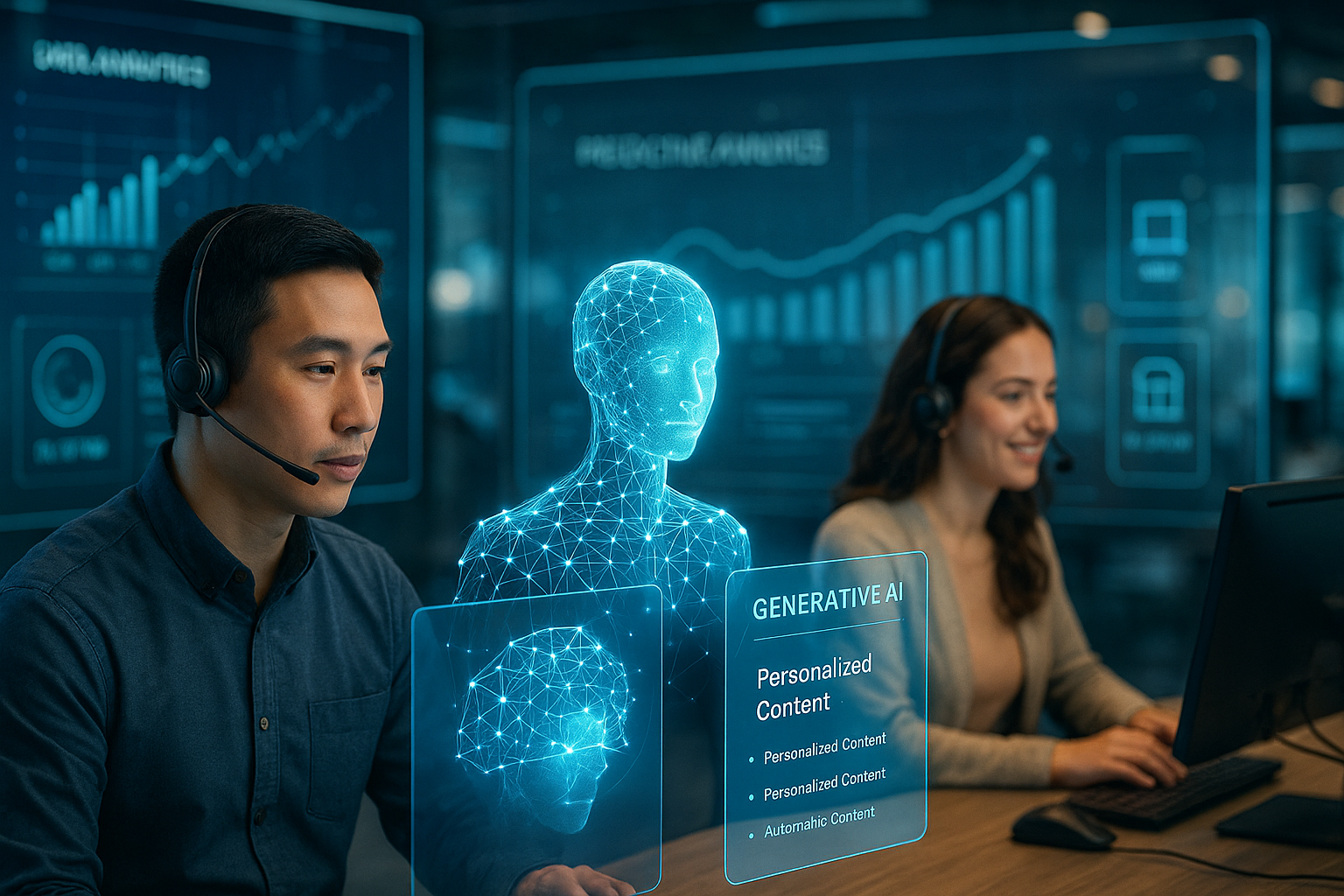
AI-Powered Customer Experience Optimization: Transforming Engagement and Loyalty
Artificial intelligence is revolutionizing AI-powered customer experience optimization, empowering businesses to deliver highly personalized, seamless, and proactive interactions. Through advanced AI tools, organizations gain deep customer insights, leverage predictive AI to anticipate future needs, and craft engaging omnichannel journeys. This comprehensive article explores how AI elevates customer interactions through hyper-personalization, predictive analytics, AI-human collaboration, and smart data strategies. We also examine emerging future trends in AI shaping the landscape, crucial for companies seeking competitive advantage and lasting customer loyalty.
Driving Efficiency and Satisfaction with AI Success Stories
AI-powered customer experience optimization delivers measurable benefits across industries, enabling smarter, faster, and more personalized engagement. Unity, a leading game development platform, implemented AI automation including Zendesk chatbots that deflected nearly 8,000 tickets, reducing first response times by 83%. This resulted in a 93% customer satisfaction score and $1.3 million in cost savings, exemplifying how AI accelerates enterprise support efficiency.
Fintech innovator Esusu uses generative AI to streamline customer support workflows, cutting first reply times by 60% and shortening resolution by one-third. Impressively, 80% of support tickets resolve on the first interaction, boosting service speed and quality.
Global brand Nike harnesses AI-enabled hyper-personalization with intelligent product recommendations, augmented reality try-ons, and AI chat assistants that simulate human support. This customer engagement strategy increases conversion rates and lowers product returns by fostering trust and convenience.
In healthcare, AI-driven scheduling solutions automate patient appointments and reminders, reducing wait times and no-shows. For example, The Dermatology Specialists deployed an AI text-based booking platform managing 96% of scheduling conversations automatically, lifting patient satisfaction and operational productivity.
Across sectors, predictive AI-powered issue detection anticipates problems before impact. Real-time behavioral tracking combined with personalized journey orchestration delivers timely offers and support, maximizing engagement. AI-driven fraud mitigation also safeguards transactions, building trust.
Collectively, these AI advances enhance response times, resolution rates, satisfaction scores, and cost efficiency. By transcending traditional automation, AI creates proactive, data-driven advantages scalable across organizations.
Harnessing Hyper-Personalization for Next-Level Customer Engagement
Hyper-personalization takes customer experience beyond basic personalization like addressing customers by name or leveraging purchase history. Utilizing AI, machine learning, generative AI, and real-time analytics, this approach analyzes comprehensive customer signals to deliver deeply tailored, contextually relevant experiences that evolve with preferences.
Central to hyper-personalization is detailed customer profiling derived from multi-source, real-time data—transactional history, behavior patterns, device usage, location, seasonal and temporal factors, plus external influences such as social trends or weather conditions. AI-driven behavioral segmentation provides granular insights, feeding adaptive content delivery systems.
Integrating these insights across omnichannel touchpoints—including web, mobile, email, and in-store—ensures consistent and timely personalization. For example, an e-commerce platform might modify product recommendations dynamically based on browsing behavior and purchase history. Automated workflows triggered by real-time customer actions boost conversion by delivering exactly what customers need when they need it. Powered by scalable AI, hyper-personalization transforms data into dynamic customer journeys that drive quantifiable growth.
What technologies enable hyper-personalization effectively?
Essential technologies include machine learning models interpreting diverse and voluminous customer data, generative AI crafting custom-tailored content, and real-time analytics platforms that continuously update customer profiles seamlessly across devices and channels. AI chatbots and virtual assistants contribute by providing personalized responses and offers that enhance engagement. Together, these technologies form a cohesive hyper-personalized experience that underpins advanced AI-powered customer experience optimization.
Predictive AI: Anticipating Customer Needs for Proactive Engagement
Predictive AI unlocks transformative potential by analyzing multi-channel data patterns to foresee future customer needs, going beyond reactive approaches focused on past behavior. By ingesting data from digital touchpoints, purchases, and support interactions, it enables proactive engagement to preempt issues, optimize resource allocation, and simulate strategic outcomes.
The benefits of predictive AI include enhanced lifetime customer value through tailored offerings derived from sophisticated models. It supports resource optimization and reduces churn by early identification of customers at risk. Predictive AI triggers timely interventions that prevent defections and significantly improve retention.
Successful implementation depends on robust AI platforms integrating diverse data streams with rigorous data quality standards. Continuous training and recalibration ensure predictive models remain accurate as customer behavior and market conditions evolve. Viewing predictive AI as an evolving asset guarantees sustained relevance in dynamic markets.
How does predictive AI improve decision-making in customer experience?
Predictive AI enhances decisions by forecasting purchase propensity, churn risk, and support needs. This enables proactive offers, personalized outreach, and resource planning tailored to evolving demands. Real-time dashboards integrate these insights to facilitate agile responses that improve personalization and operational efficiency.
How does predictive AI anticipate customer behavior before issues arise?
By continuously analyzing behavior patterns and transaction data, predictive AI detects early signs of dissatisfaction or emerging needs. This foresight allows businesses to engage proactively, mitigating risks and strengthening loyalty.
Omnichannel Integration: Delivering Seamless and Consistent Customer Experiences
Consumers today expect smooth, unified brand interactions across diverse platforms. Effective omnichannel integration provides effortless transitions among mobile browsing, online purchases, and physical store pickups while maintaining consistent design and messaging.
Best practices include responsive design adapting interfaces to device capabilities and channel-specific needs without compromising brand identity. Real-time synchronization of inventory, customer profiles, and interaction history guarantees consistent information flow, reinforcing trust through unified messaging.
Automated AI chatbots and intelligent routing accelerate resolution of routine queries, while skilled agents address complex or sensitive matters, enhancing satisfaction. Performance optimizations such as smart caching and data compression minimize load times to reduce customer drop-offs.
UK retailers set exemplary standards in omnichannel execution. John Lewis’ Click & Collect integrates real-time stock syncing, supporting over half of online orders collected in-store. Argos merges digital and physical retail layers with instant stock verification for same-day pickups. ASOS employs analytics-driven personalization across platforms for frictionless mobile shopping. Boots combines health and beauty retail with synchronized ERP and marketing platforms, enabling over 70% of online purchases for in-store pickup. These cases highlight how AI-powered omnichannel integration elevates customer engagement, loyalty, and operational efficiency.
Why is omnichannel integration critical to customer experience?
Omnichannel integration removes friction by delivering continuous, consistent interactions across channels. Seamless synchronization causes customers to feel recognized and valued, improving retention and revenue.
How does AI enhance omnichannel integration in CX?
AI bolsters omnichannel integration by enabling real-time data syncing, personalized communication, and intelligent interaction routing across channels. This delivers consistent, swift experiences that foster engagement and satisfaction.
AI-Human Collaboration: Combining Scale and Emotional Intelligence
AI-human collaboration revolutionizes customer service by fusing AI’s operational efficiency with human empathy. AI automates repetitive tasks through chatbots and workflow automation, freeing agents to focus on nuanced issues requiring emotional intelligence. This synergy maintains a seamless, uninterrupted customer journey.
AI tools provide agents with real-time insights and personalized responses, expediting resolution and enhancing engagement. For instance, Netflix uses AI to handle high volumes of routine inquiries, enabling human agents to assist with specialized support cases. Humana automates workflows and equips agents with critical client data for faster, accurate service. AI facilitates seamless escalation of complex issues, optimizing resource use.
This collaboration raises productivity—AI manages up to 13.8% more queries per hour—ensures 24/7 support availability, and boosts satisfaction by combining data-driven context with empathetic judgment.
What are the benefits of AI-human collaboration in customer service?
Combining AI efficiency with human empathy improves operational scalability and service quality. AI efficiently handles routine queries, reducing agent burnout and maintaining engagement, while humans address emotional and complex needs, leading to higher customer satisfaction.
Leveraging Data Analytics in CX for Continuous Improvement and Measurable Impact
Data analytics in CX advances traditional measurement by linking key metrics like Customer Satisfaction (CSAT), Net Promoter Score (NPS), Customer Effort Score (CES), and Customer Lifetime Value (CLV) to specific journey touchpoints. This reveals friction or delight areas, guiding precise improvements.
AI-powered natural language processing analyzes sentiment and textual data from surveys, social media, and call transcripts, unveiling emotional and behavioral insights beyond standard scores.
Real-time dashboards track KPIs dynamically, alerting teams to emerging trends and issues for quick resolution. This proactive monitoring personalizes journeys at scale, elevating engagement and loyalty.
Advanced analytics correlates CX outcomes with retention, revenue growth, and churn reduction. Predictive AI highlights upsell opportunities and refines processes, transforming CX into a strategic, data-driven asset.
Which CX metrics are most actionable for AI-powered optimization?
Metrics such as CSAT, NPS, CES, and CLV become actionable when linked with behavioral and sentiment data. This combination guides targeted refinements that enhance customer journeys and satisfaction.
How does data analytics enhance AI-powered customer experience optimization?
By delivering detailed insights into behavior and preferences, data analytics supports precise personalization, predictive targeting, and effective problem-solving. Together, these amplify the impact of AI-powered CX strategies.
Actionable Customer Insights Driving Success Across Industries
Organizations across sectors harness customer insights to boost satisfaction, retention, and revenue. NCBA Bank uses behavioral intelligence to improve segmentation and personalized engagement, increasing loyalty.
Luxury automaker Bentley Motors applies data visualization tools to capture holistic customer journey views, enabling bespoke experiences and stronger brand affinity. Amazon leads e-commerce through advanced predictive analytics powering its recommendation engine, enhancing conversions and average order value. Starbucks capitalizes on granular loyalty program data to deliver highly personalized offers that maintain engagement.
Entertainment giants Netflix and Spotify incorporate AI algorithms updating recommendations dynamically based on real-time consumption data. Call centers employ AI analysis of voice and chat data to rapidly pinpoint customer pain points and resolve them effectively.
Marketing teams use sentiment analysis to swiftly adjust campaigns, exemplified by Coca-Cola’s agile social media responsiveness. Companies like AccuWeather utilize predictive analytics for timely weather insights impacting key business decisions.
From AI-driven real-time feedback systems to integrated visualization platforms, these actionable customer insights fuel business transformation. They heighten satisfaction, curb churn, and accelerate growth, demonstrating the tangible value of AI-powered customer experience optimization.
Future Trends in AI Customer Experience: What Lies Ahead
Future trends in AI promise profound advances driving hyper-personalization and operational excellence. Enhanced predictive analytics will empower brands to deliver adaptable, context-aware experiences anticipating customer behavior and intent. Research shows hyper-personalized engagement can generate 40% more revenue, with 80% of consumers preferring such brands.
Emotionally intelligent AI systems will detect and respond to customer sentiment, enabling empathetic, humanlike interactions. Natural language voice AI will improve accessibility and communication across channels. Autonomous AI agents are set to manage complex tasks independently, reducing human workload while boosting efficiency.
Personal AI assistants will serve as intermediaries, managing conversations fluidly across platforms. Comprehensive omnichannel integration remains essential for consistent, seamless experiences that increase loyalty via predictive care.
Success requires bold investments in these technologies alongside responsible AI ethics and data privacy safeguards. Combining emotional intelligence, proactive problem solving, and voice capabilities with hyper-personalization positions businesses to delight customers, streamline operations, and sustain long-term competitive edge.
Conclusions
AI-powered customer experience optimization is fundamentally reshaping how businesses engage customers, boosting satisfaction, loyalty, and operational efficiency. By integrating hyper-personalization, predictive AI, and omnichannel strategies into a seamless customer journey, companies deliver unparalleled tailored experiences at scale. The AI-human partnership elevates service quality, while data analytics in CX drives continuous improvement and measurable outcomes. Emerging innovations like emotional AI, autonomous agents, and voice interaction will further redefine engagement. Embracing these advances equips businesses to build future-ready customer experiences and maintain lasting advantages.
Internal Links:
- Multi-Agent SDR Systems Explained
- AI-Human Collaboration Strategies in Customer Experience
- Data Analytics in CX: Boosting Personalization and Insights
External Links:
Contact us to explore how we can help you harness AI-powered customer experience optimization to drive growth and loyalty. Request a consultation.